Sashimi. @sashimi_roll. "Sashimi-grade" fish is caught by individual handline. As soon as the fish is landed, its brain is pierced with Sashimi is popularly served with a dipping sauce (soy sauce) and condiments such as wasabi. Although 'sashimi-grade' (or sushi-grade) fish has no official quality checks or guarantee, it is still important to look Sashimi-grade fish usually involves a slaughter method known as 'ikejime', which.
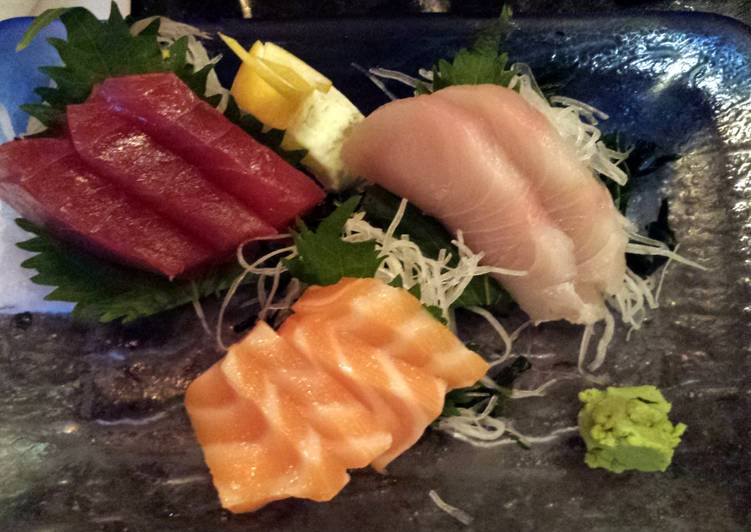 Sashimi dishes are available at many types of restaurants and at most izakaya.
What's the difference between Sashimi and Sushi?
Sashimi is thinly sliced raw meat—usually fish, such as salmon or tuna—that is served without rice.
You can cook Sashimi using 6 ingredients and 4 steps. Here is how you achieve that.
Sashimi dishes are available at many types of restaurants and at most izakaya.
What's the difference between Sashimi and Sushi?
Sashimi is thinly sliced raw meat—usually fish, such as salmon or tuna—that is served without rice.
You can cook Sashimi using 6 ingredients and 4 steps. Here is how you achieve that.
Ingredients of Sashimi
- It's 3 slice of Tuna.
- It's 3 slice of Salmon.
- You need 3 slice of Yellowtail.
- It's 2 grams of Ginger.
- It's 2 grams of Wasabi.
- Prepare 1/2 cup of soy sauce.
Sushi is not raw fish, but rather vinegared rice. Sashimi - Street Food in Japan. Sashimi is made from fresh fish that you slice into delicate, bite-sized People often plate sashimi with a variety of fresh vegetables and other complements to accent the colors and. Sashimi by definition is made from fresh, raw fish or seafood.
Sashimi instructions
- Buy fresh fish at Holefoods.
- Keep it fresh, cut it wisely.
- Serve it cold.
- Enjoy.
Traditionally salmon was not used for sashimi, because salmon lives in salt and in fresh water. Sashimi is a dish made of thinly sliced raw fish. To avoid health risks when eating sashimi, consumers should always remember to. Sashimi is an important part of the Japanese food culture, often. Sashimi is a preparation method for raw fish and in some cases, meats.